

The Astrology of Time: An Introduction
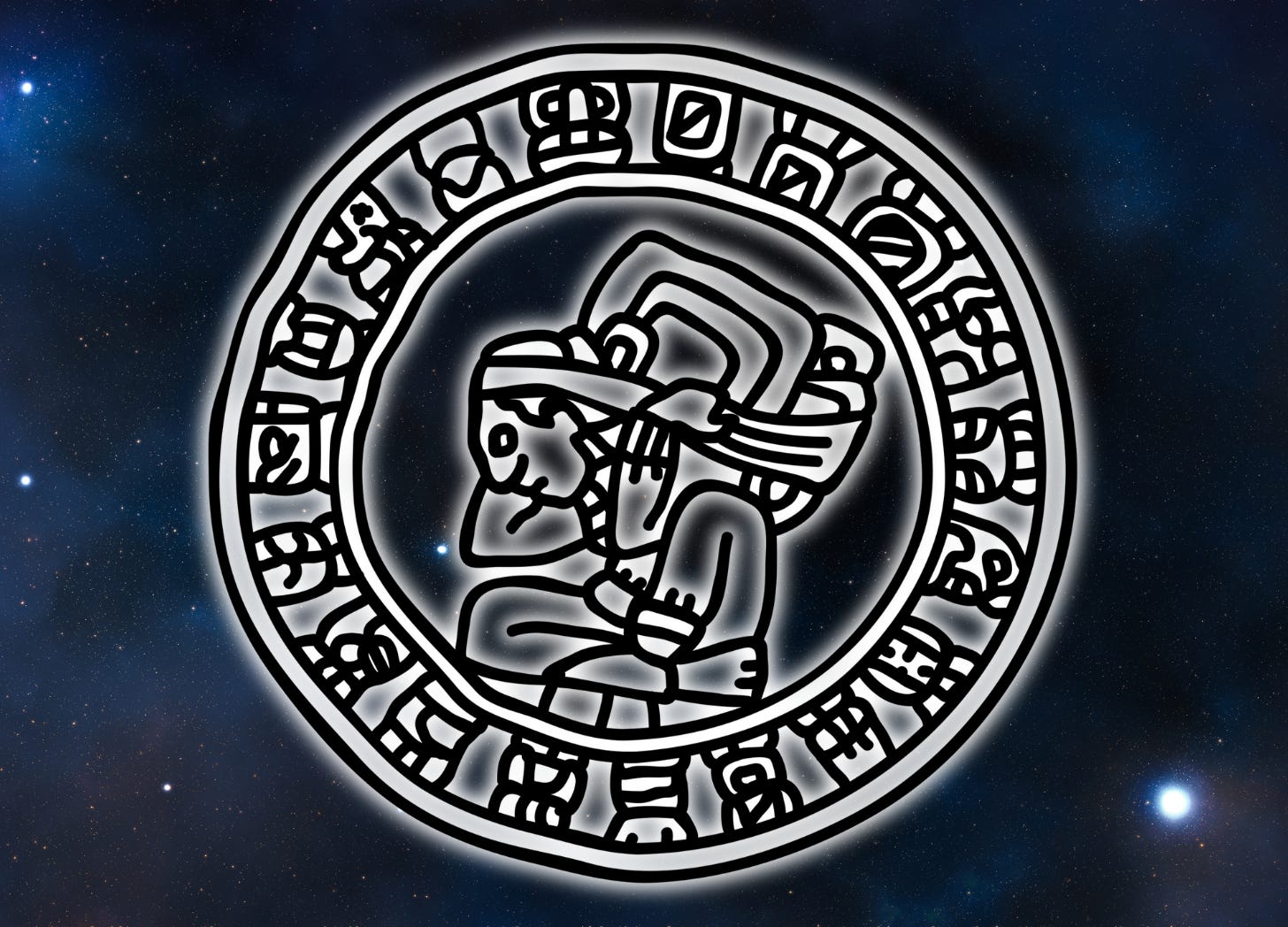
Like many ancient peoples, the Maya and Aztecs studied the mysterious influence of the rhythms of sky and myth on earthly life. However, the sophisticated way in which they organized and interpreted these rhythms is uniquely their own. Every 24 hours, the Sun rises and sets, creating the basic cycle of life around which we set our clocks and calendars. Using this all-important cycle, the day, as their basic unit, the ancient American astrologers found significance in many cycles that are even multiples of the day.
What sets Mayan astrology apart from other astrological traditions is its foundation in pure mathematical cycles rather than planetary movements alone. The Maya clocked motions of the Sun, Moon and likely Mars with sophisticated algorithms, developing a system that modern researchers have found remarkably accurate. About 100 years ago, Europeans discovered similar cycles and called them biorhythms. Yet, the Maya had been tracking these patterns for millennia.
The Mathematical Perfection of Sacred Time
The most important Mayan/Aztec cycles were those of 1 day, 9 days, 13 days and 20 days. In addition, they discerned a 52-year cycle composed of 4- and 13-year cycles. They also paid close attention to divisions of the 584-day Sun-Venus cycle. This sophisticated understanding puts any given day at a certain place in at least half a dozen cycles, ensuring that for a very long period, no two days are exactly the same.
The Tzolkin is mathematically perfect; it has never been changed and there never will be a change on it. This certainty results from centuries of observations and work by significant Mayan astronomers, astrologers, mathematicians and wise people. Unlike calendars that require periodic adjustments, the Tzolkin’s 260-day cycle represents what the Maya understood as the flow of spiritual energies through time.
The Living Tradition: From Ancient Temples to Modern Practice
Contrary to popular belief, Mayan astronomical and astrological knowledge did not disappear with the Spanish conquest. Some 13 million people still speak one or more of 30 Mayan-descended languages and their astronomical knowledge lingers, especially folklore and stories with agricultural or ecological import. When anthropologists visited Maya communities in the 20th century, they found the 260-day calendar and elements of the solar calendar still cycling, with experts who could divine the time of night by watching the stars spin overhead and feel the earth spin underfoot.
This continuity is remarkable given the historical suppression. During the first centuries after cross-Atlantic contact, hieroglyphic writing was actively suppressed and replaced with writing using the Latin alphabet. Yet the core knowledge persisted, passed down through generations of Daykeepers and spiritual practitioners.

Understanding the Unique Features of Mayan Astrology
1. The Day-Sign System
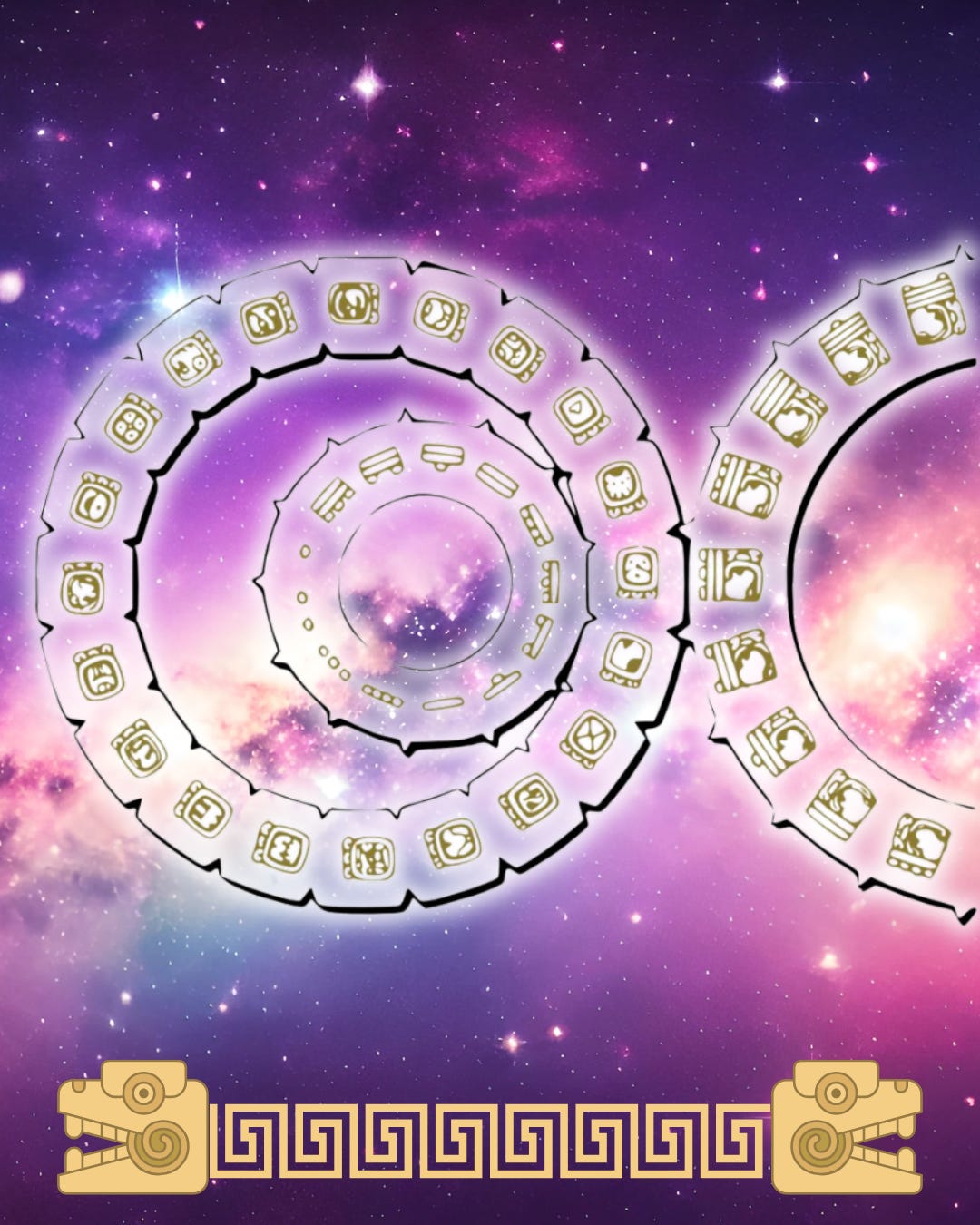
Unlike Western astrology’s twelve zodiac signs, Mayan astrology employs 20 day-signs (called nahuales or Chumil’ab depending on tradition), each representing distinct energies and characteristics. These 20 named days are cycled 13 times to create the 260-day calendar, the Tzolkin, creating 260 possible personality types—arguably far more nuanced than conventional zodiac systems.
2. Multiple Interlocking Cycles
Your Mayan astrological profile involves multiple cycles operating simultaneously:
The 20-day cycle of day-signs
The 13-day cycle (trecena) providing numerical coefficients
The 9-day cycle of Night Lords (Lords of the Night)
The 365-day solar year (Haab’)
The Venus cycle of 584 days
The 52-year Calendar Round
…just to name a few. Each cycle adds layers of meaning, creating a complex but remarkably accurate portrait of personality and life path.
3. The Biorhythmic Connection
Modern researcher Bruce Scofield has identified fascinating connections between Mayan cycles and what we now call biorhythms. The 23-day physical biorhythm is very close to 1/16 of the solar year and three times the 88-day cycle of Mercury equals exactly 8 times the 33-day mental biorhythm. This suggests the Maya discovered fundamental biological and psychological rhythms that modern science is only beginning to understand.
4. Collective and Personal Rhythms
Perhaps most intriguingly, the Maya tracked both personal and collective biorhythms. The ancient Maya kept track of a 65-day rhythm which seems to be a kind of collective biorhythm, marking crisis points or “burner dates” when societies experience heightened tension and transformation. These dates, occurring four times within the 260-day calendar, were observed through elaborate rituals designed to channel collective energies constructively.
The Science Behind the Sacred
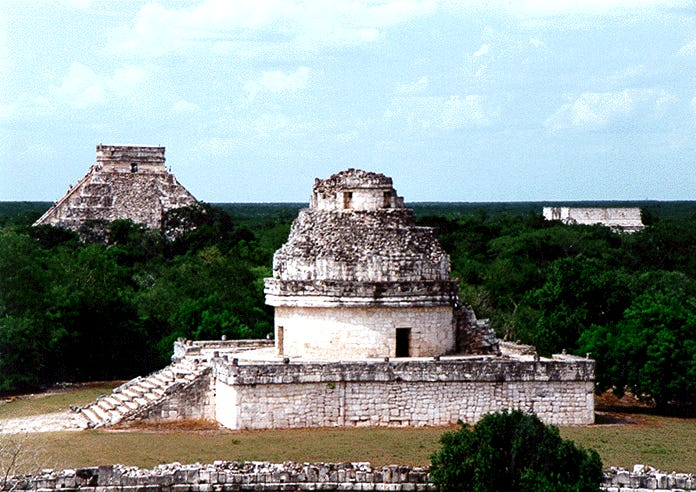
Recent archaeological discoveries have validated the sophistication of Mayan astronomical observations. Many Mayan temples were inscribed with hieroglyphic texts containing both calendric and astronomical content, based on naked-eye astronomy observations of the azimuths of the rising and setting of heavenly bodies. Sites like El Caracol at Chichen Itza served as observatories, with structures precisely aligned to track Venus’s path through the year.
The Dresden Codex, one of the few surviving Mayan books, reveals the depth of their astronomical knowledge. The accuracy of its observations, especially the calculation of a kind of ‘leap year’ in the Mayan Calendar, represents a remarkable innovation in mathematics and astronomy. This wasn’t mere numerology but sophisticated science, with Mayan astronomers making discoveries comparable to those of Copernicus centuries later.
Benefits of Working with Mayan Astrology
1. Deeper Self-Understanding
A Mayan Life Path reading examines your place in specific cycles, revealing facets of your personality that may seem contradictory at first glance. This is because human nature is complex. We present different faces depending on whom we meet and the situations we encounter. The multiple cycles of Mayan astrology acknowledge and map this complexity.
2. Timing and Life Rhythms
Understanding your personal peak dates: the crucial 65-day intervals when life tends to accelerate and become more eventful, can help you navigate important decisions and transitions. These cycles start at birth and provide a roadmap for understanding when you’re likely to experience significant turning points.
3. Cultural and Spiritual Connection
The Maya created the Tzolkin calendar not solely on astronomical observations but based it on shamanic trance states, revealing a calendar which explains the flow of spiritual energies. Working with this system connects you to an ancient wisdom tradition that views time not as linear progression but as sacred cycles of transformation.
4. Complementary Insights
While Mayan astrology/geostrology is very different from Western astrology, you’ll find that what it reveals about you usually shows many correlations with your conventional horoscope. But because Mayan astrology sees you through its own distinctive lens, it provides fresh and useful insights that complement rather than contradict other astrological systems.
Why Book a Mayan Astrology Reading?
In our modern world, we’ve largely lost touch with natural rhythms and cycles. We live by mechanical clocks and digital calendars that tell us WHEN but not WHY. Mayan astrology offers something different: a return to sacred form through sacred time, where each day carries specific energies and possibilities.
A professional Mayan astrology reading provides:
Personalized interpretation of your birth energies across multiple cycles
Identification of your peak dates for the coming years
Understanding of your life purpose as revealed through the day-sign combinations
Practical guidance for working with your natural rhythms rather than against them
Integration with modern life while honoring ancient wisdom
As we navigate an increasingly complex world, the Maya’s understanding of time as interlocking cycles of meaning becomes ever more relevant. Their system reminds us that we are not separate from cosmic rhythms but participants in a grand dance of energies that has been unfolding since time began.
Whether you’re seeking deeper self-knowledge, better timing for important decisions or connection with an authentic spiritual tradition, Mayan astrology/geostrology offers profound insights that have guided humanity for over two millennia. In discovering your place within these sacred cycles, you join a lineage of wisdom keepers who understand that to know oneself is to know one’s place in the cosmos and to know one’s place in the cosmos is to live in harmony with the fundamental rhythms of existence.
Services
Mayan Astrology Birth Chart Reading: an in-depth soul blueprint analysis that reveals your cosmic destiny through ancient Maya Telluric Astrology, analyzing your daysign, trecena, Venus cycle, Lord of Night, birth year energy and peak manifestation days based on your exact birth moment.
References
Aldana, Gerardo. “Discovering Discovery: Chich’en Itza, the Dresden Codex Venus Table and 10th Century Mayan Astronomical Innovation.” Journal of Astronomy in Culture 1 (2016): 57-76.
Aldana, Gerardo. “Glyph G and the Yohualteuctin: Recovering the Mesoamerican Practice of Time Keeping and Nightly Astrology.” Archaeoastronomy XXI (2007-2008): 59-75.
Aveni, Anthony F. Skywatchers: A Revised and Updated Version of Skywatchers of Ancient Mexico. Austin: University of Texas Press, 2001.
Bricker, Victoria R., and Helga-Maria Miram. An Encounter of Two Worlds: The Book of Chilam Balam of Kaua. New Orleans: Middle American Research Institute, Tulane University, 2002.
Hart, Thomas. The Ancient Spirituality of the Modern Maya. Albuquerque: University of New Mexico Press, 2008.
Holbrook, Jarita, et al., eds. African Cultural Astronomy: Current Archaeoastronomy and Ethnoastronomy Research in Africa. New York: Springer, 2008.
Molesky-Poz, Jean. Contemporary Maya Spirituality: The Ancient Ways Are Not Lost. Austin: University of Texas Press, 2006.
Scofield, Bruce. “The Burner Periods in Mayan Astrology: A Biorhythm for Collective Ventilation and Integration.” The Mountain Astrologer, October/November 1997.
Scofield, Bruce. Day-Signs: Native American Astrology from Ancient Mexico. Amherst, MA: One Reed Publications, 1991.
Scofield, Bruce. The Nature of Astrology: History, Philosophy, and the Science of Self-Organizing Systems. Rochester, VT: Inner Traditions, 2023.
Scofield, Bruce, and Barry C. Orr. How to Practice Mayan Astrology: The Tzolkin Calendar and Your Life Path. Rochester, VT: Bear & Company, 2006.
Sitler, Robert. The Living Maya: Ancient Wisdom in the Era of 2012. Berkeley: North Atlantic Books, 2010.
Vail, Gabrielle, and Christine Hernández. Re-Creating Primordial Time: Foundation Rituals and Mythology in the Postclassic Maya Codices. Boulder: University Press of Colorado, 2013.
“What Did the Ancient Maya See in the Stars? Their Descendants Team Up with Scientists to Find Out.” Science, American Association for the Advancement of Science, 2024.


