


The history of the ancient Maya is not a footnote. It is a thunderclap. For centuries, Western scholarship reduced one of the most sophisticated civilizations in human history to ruin porn — crumbling pyramids stripped of their people, their politics, their ferocity. What follows is a correction. Ten rulers who bent the course of history through military genius, spiritual authority, political cunning and sheer force of will. These were not side characters in the story of western centric history. They were Player Ones’ in the console of the western hemisphere.

10. Marcus Canul — Icaiche Maya, Belize (d. September 1, 1872)
Most Belizeans didn’t learn his name in school. That erasure is intentional. Marcus Canul was the military leader of the Icaiche Maya who waged sustained guerrilla warfare against British colonial expansion in what is now Belize, demanding the Crown pay rent for stolen land and compensation for burned crops. He led raids across the northwest, briefly seized Corozal Town in 1870 and met his end at the Battle of Orange Walk on September 1, 1872 — mortally wounded, refusing surrender. He died as he lived: undefeated in spirit. Colonial history buried him. We’re digging him back up.
9. Yuknoom Ch’een II (”Yuknoom the Great”) — Calakmul (r. 636–686 CE)
Before Tikal’s name meant anything again, Yuknoom the Great had already turned Calakmul into the most powerful city in the Maya world. Lord of the Snake Kingdom, he ruled for fifty years, assembling a web of alliances, client states and strategic marriages that stretched across 150 kilometers of the lowlands. He was a geopolitical architect. Under his reign, Calakmul didn’t just fight — it puppeteered its region like a master. It positioned. It dominated. His nemesis, Jasaw Chan K’awiil of Tikal, would only unseat Calakmul’s dominance nine years after Yuknoom’s death. Even then, the Snake King’s shadow lingered.
8. Hunac Ceel — Mayapán (fl. 13th century CE)
He dove into the sacred cenote at Chichen Itza — a ritual sacrifice well…and survived. Not only did he survive, he surfaced with a prophecy. That act of terrifying courage catapulted him from obscurity to political power and he used that power to overthrow the Itza and establish Mayapán as the dominant city of the Postclassic Yucatán. Whether the dive was calculated or divinely inspired, it doesn’t matter. He turned a near-death experience into a dynasty.
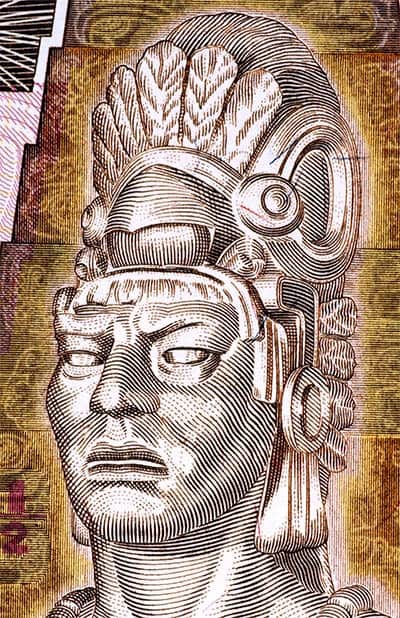
7. Tecun Uman — K’iche’ Maya, Guatemala (d. February 20, 1524)
The last great military captain of the K’iche’ fell at the Battle of El Pinar fighting Pedro de Alvarado’s Spanish forces — and became immortal doing it. Tecun Uman is now the national hero of Guatemala, but strip away the 20th-century nationalist framing and what remains is a warrior-priest who organized indigenous resistance against a technologically superior and diseased colonial force. He chose to fight. That choice mattered, then and now.
6. Lady Xok — Yaxchilan (fl. 681–742 CE)
Lady Xok didn’t rule Yaxchilan. She shaped it. As the primary wife of Shield Jaguar II, she appears on some of the most stunning carved lintels in Maya art — performing bloodletting rituals, conjuring vision serpents from her own body and legitimizing her husband’s military campaigns through her ritual authority. She was a practitioner in the fullest sense: her blood fed the cosmos and her power fed the state. Don’t let the word “consort” confuse you. Lady Xok ran the spiritual infrastructure of a kingdom.
5. Ix K’abel — Waka (fl. 672–692 CE)
She held the title Kaloomte’ — a rank higher than her husband, the king. Read that again if you must. In a civilization that produced male warrior-kings as a matter of course, Ix K’abel of the city of Waka (El Perú) claimed the supreme military title of the western Maya world. She was a Snake Kingdom princess who brought Calakmul’s alliance network with her into her marriage, wielding political leverage that her husband simply could not match. A jade portrait vessel likely depicting her was discovered in her tomb. The inscription on a stela at the site calls her “Lady Serpent Lord.” She earned every word.
4. Lady Six Sky — Naranjo (fl. 682–741 CE)
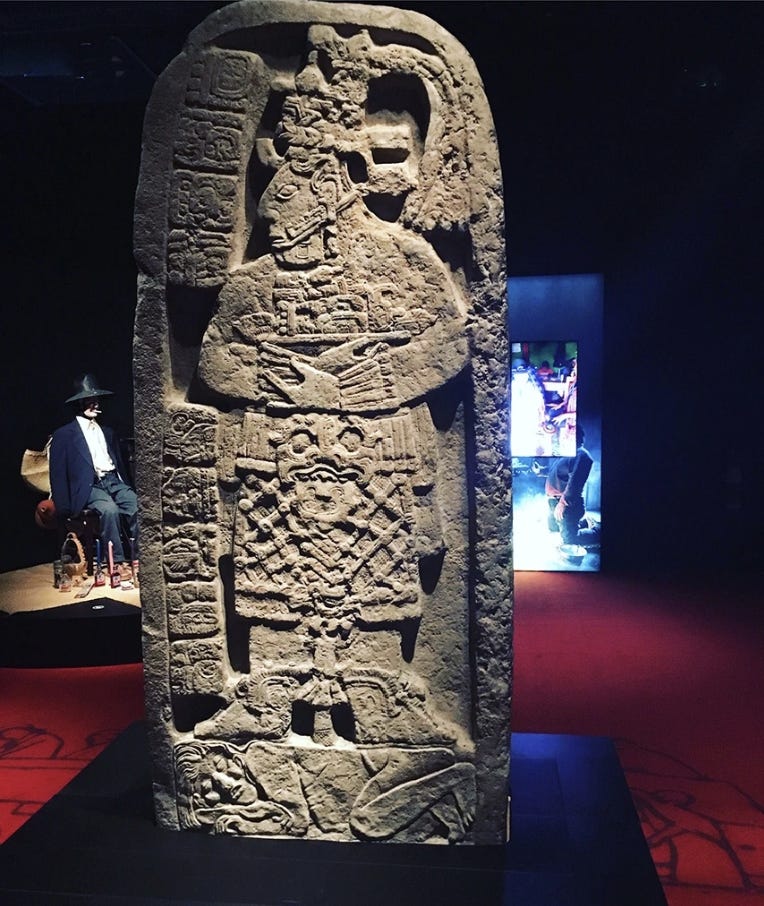
Naranjo was in ruins when Lady Six Sky arrived from Dos Pilas in 682 CE. Within years, the city was back at war. But this time, Naranjo was winning. She orchestrated a series of military campaigns, commissioning monuments depicting herself standing atop bound captives in the classic posture of conquering kings. She didn’t pretend to exercise power through her son. She exercised it herself. Lady Six Sky is what happens when a dynasty sends their best weapon to rebuild a broken city.
3. Jasaw Chan K’awiil I — Tikal (r. 682–734 CE)
Tikal had been humiliated for a generation. Calakmul and its allies had broken the city’s monument production, subjugated its trade networks and installed puppet rulers in its satellite states. Then Jasaw Chan K’awiil took the throne and spent thirteen years planning his revenge. In 695 CE, he defeated Yuknoom Yich’aak K’ahk’ of Calakmul in open battle — breaking the Snake Kingdom’s hegemony in a single engagement. He built Temple I at Tikal as a permanent monument to that victory, a pyramid visible across the jungle canopy. Thirteen years of patience. One decisive blow. The throne of the entire Maya lowlands.
2. K’inich Kan Bahlam II — Palenque (b. May 23, 635; r. 684–702 CE)
This week, we mark the birth anniversary of one of the most sophisticated ruler-priests the Maya world ever produced. Kan Bahlam II inherited Palenque from his father Pakal the Great. He not only maintained the progress of Pakal’s legacy — he expanded it. He commissioned the Temple of the Cross Complex, one of the most theologically dense architectural programs in Mesoamerican history: three temples encoding the Maya creation myth, the movements of celestial bodies and the divine legitimacy of Palenque’s dynasty in stone. He was a theologian-king. A cosmological architect. Everything built at Palenque under his reign is an argument — about the nature of time, the descent of gods, the authority of rulers. He didn’t just build temples. He built a cosmic vault.
1. K’inich Janaab Pakal (”Pakal the Great”) — Palenque (r. 615–683 CE)
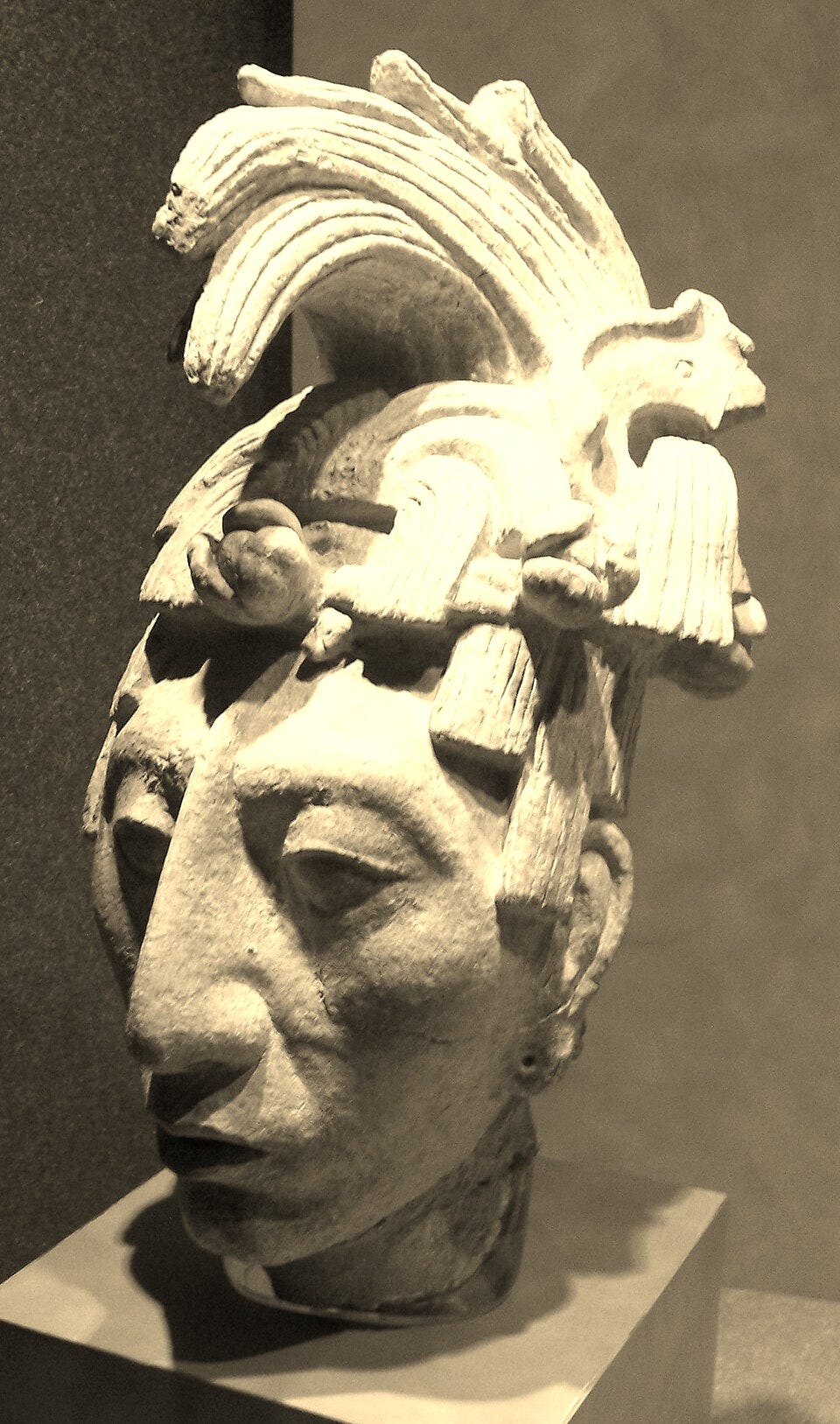
No one on this list looms larger. Pakal took the throne of Palenque at age twelve after the city had been sacked twice by Calakmul — in 599 CE and again in 611 CE. He ruled for sixty-eight years. In that span, he transformed a humiliated city-state into the artistic and cosmological crown jewel of the Classic Maya world. His tomb in the Temple of the Inscriptions is among the great archaeological discoveries of the twentieth century: a sarcophagus lid carved with a map of the cosmos, his body adorned with jade, his passage into the underworld narrated in stone. He was buried as an illuminated ancestor. After sixty-eight years reshaping time itself, you begin to understand why.
These rulers did not live in the past. They live in the present tense — in bloodlines, in ceremonial calendars, in resistance, in stone. The Maya world never died. It transformed. And it is transforming, yet again.
Unlock the Practical Magic Vault
Paid subscribers not only support me delivering you the highest quality occult content out there, but also get access to the Practical Magic Vault—a collection of 4 cornerstone courses on Manifestation, Love, Wealth and Spirit Magic plus exclusive content every week.
Services
Mayan Astrology Birth Chart Reading: an in-depth soul blueprint analysis that reveals your cosmic destiny through ancient Maya Telluric Astrology, analyzing your daysign, trecena, Venus cycle, Lord of Night, birth year energy and peak manifestation days based on your exact birth moment.
Sources
Martin, Simon, and Nikolai Grube. Chronicle of the Maya Kings and Queens. London: Thames & Hudson, 2008.
Schele, Linda, and David Freidel. A Forest of Kings: The Untold Story of the Ancient Maya. New York: William Morrow, 1990.
Coe, Michael D. The Maya. 9th ed. London: Thames & Hudson, 2015.
Sharer, Robert J., and Loa P. Traxler. The Ancient Maya. 6th ed. Stanford: Stanford University Press, 2006.
Macleod, Murdo J. “The Caste War of Yucatán and British Honduras.” In Mesoamerica and the Spanish Colonial Experience. 1998.
Looper, Matthew G. To Be Like Gods: Dance in Ancient Maya Civilization. Austin: University of Texas Press, 2009.
Martin, Simon. “The Snake Kingdom: History and Ideology of the Kan Polity.” In Maya Archaeology 3. San Francisco: Precolumbia Mesoweb Press, 2020.


