

Shia LaBeouf isn’t the only thing that ruined Indiana Jones before the Dial of Destiny.
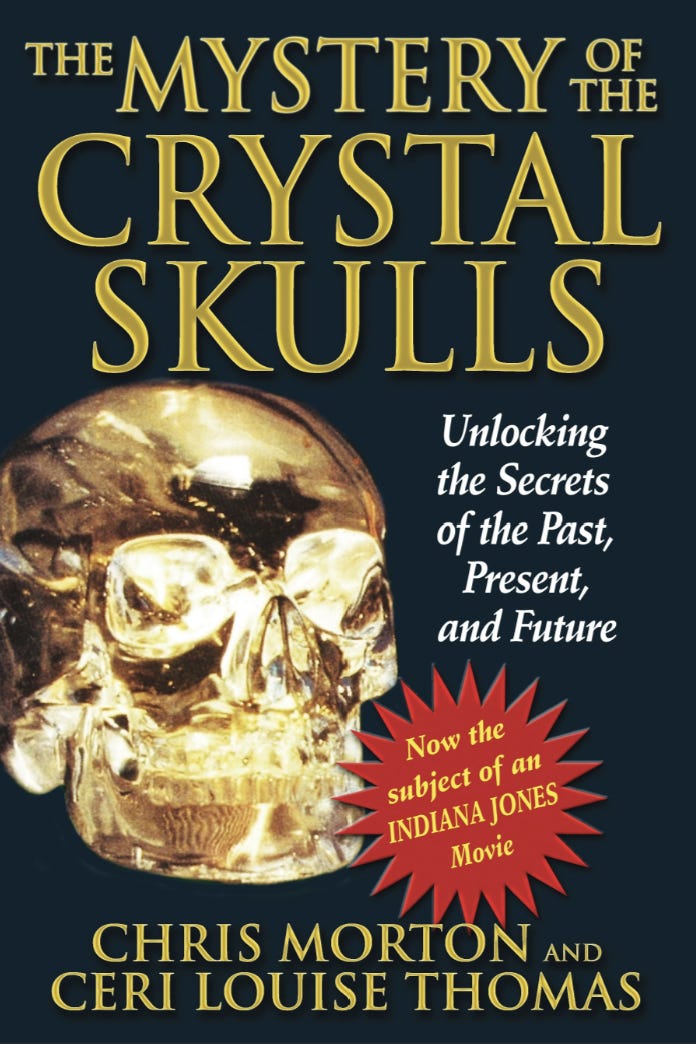
Life-sized skulls carved from crystal, allegedly created by ancient Maya priests thousands of years ago, imbued with mystical powers and secret knowledge. Such a sexy idea: a lost super-civilization, advanced technology hidden in plain sight, sacred artifacts waiting to reveal humanity’s cosmic destiny.
Oops, one problem: every single crystal skull is a modern forgery. Not one has been found in a legitimate archaeological excavation and scientific analysis proves they were carved with 19th-century European tools.
Yet the lie persists, museums display them and spiritual practitioners venerate them. Perhaps most disturbingly, prominent Maya elders have spent decades promoting crystal skull mythology, claiming they’re ancient artifacts from Atlantis, created by extraterrestrials, holding power to terraform Earth, banish evil tyrants and make all our modern problems go away in a flash.
The crystal skull scam is rooted in colonial racism: the assumption that indigenous peoples were too primitive to build their own civilizations, so their achievements must be credited to a “superior race” from Atlantis or the Pleiades etc. When Maya elders promote these narratives, they participate in erasing their own ancestors’ genuine accomplishments.
My hope is that this article will be the first of many nails in this crystal crap’s coffin.
The Origin: 19th-Century Forgeries Enter the Market
The real story of the crystal skulls actually begins in the late 19th century when several life-sized skulls carved from clear or milky quartz surfaced in the European antiquities market. These were often attributed to ancient Mesoamerican cultures, particularly the Maya and Aztec.[^1]
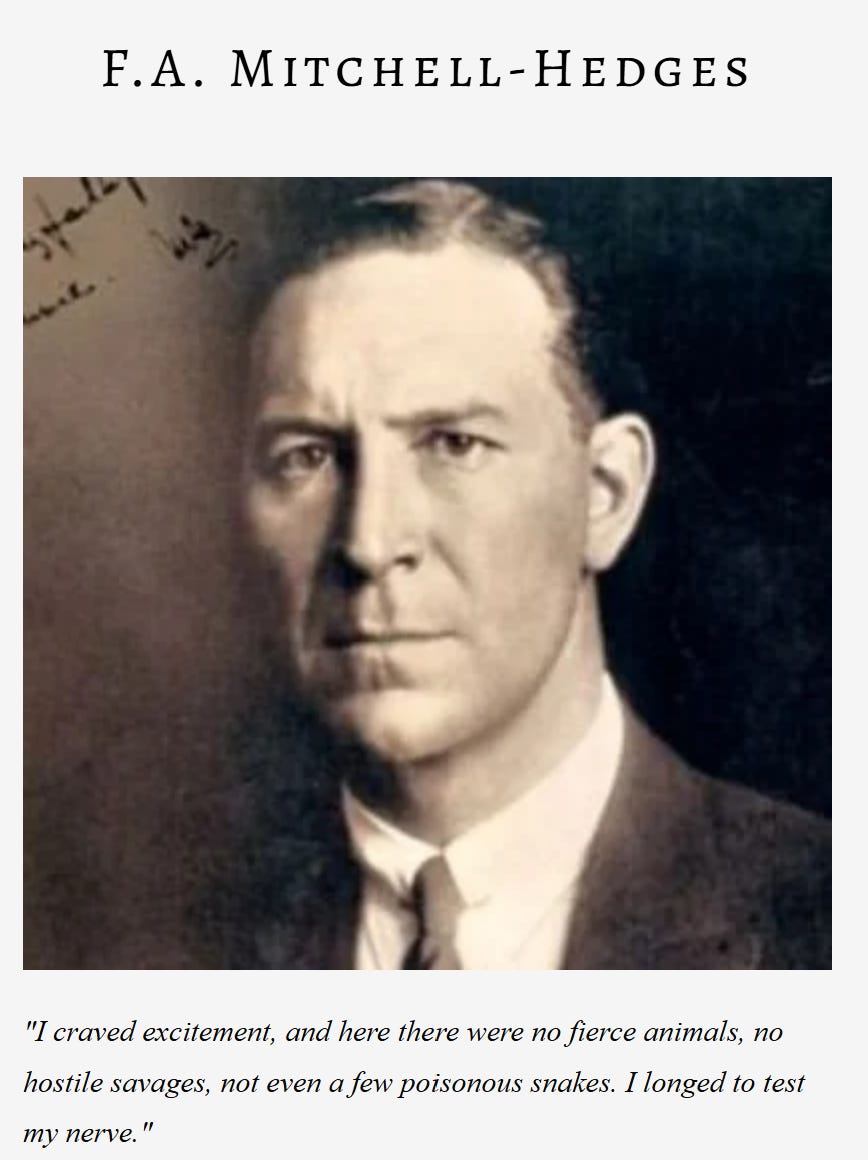
The most famous is the Mitchell-Hedges skull, also known as the “Skull of Doom,” allegedly discovered by Anna Mitchell-Hedges during her father F.A. Mitchell-Hedges’ archaeological expedition in Belize at the site of Lubaantun in 1924.[^2]
Other notable skulls include:
- The British Museum skull, purchased from Tiffany & Co. in 1897
- The Smithsonian Institution skull, anonymously mailed to the museum and claimed to be from the collection of Porfirio Díaz
- The Paris skull, from the collection of Eugène Boban, a prominent 19th-century antiquities dealer[^3]
These skulls were presented as authentic pre-Columbian artifacts numerous times. The Mitchell-Hedges skull was said to be at least 3,600 years old and used by Maya high priests for esoteric rituals.[^4]
But, F.A. Mitchell-Hedges was an adventurer, not an archaeologist. Even by the infant standards of early 20th-century archaeology, his approach was highly scrutinized. Considering Hedges’ find, there are still no crystal skulls that have ever been found in documented archaeological excavations.[^5]
What Maya Culture Actually Says About Skulls
The Maya and really all of Mesoamerica had an illustrated relationship with death and skull imagery. Meso art and iconography, skulls played significant roles:
- As representations of death and the Underworld
- In rituals associated with ancestor worship
- As trophies of war and symbols of power
- In calendrical and astronomical symbolism[^6]
Archaeological evidence shows the Maya created skull-like objects, but these were typically made from materials such as jadeite, gold or stone. Another skull related activity was cranial deformation, elongating infants’ skulls—a prevailing theory suggests this was to resemble the Maize God.[^7]
Despite the cultural significance of skulls in Maya civilization, there is no archaeological evidence that crystal skulls are of Maya origin. The style and craftsmanship definitively don’t match known Maya artistic traditions across their 4,000-year history.[^8]

The Scientific Proof: They’re Fake
Jane Walsh at the Smithsonian has conclusively shown these artifacts were created in the 19th century, likely in Europe.[^9] Scientific analysis in 2019 revealed damning evidence:
Scanning Electron Microscopy showed modern lapidary techniques including rotary tools and carborundum abrasives—unavailable in pre-Columbian Mesoamerica.[^10]
Material analysis showed many skulls carved from Brazilian quartz not Mesoamerican, unavailable to ancient Maya artisans.[^11]
The evidence is conclusive. These are 19th-century forgeries.
The Racist Core: Why Crystal Skulls Exist
Crystal skull mythology doesn’t just claim these are ancient artifacts. The narratives consistently attribute them to a “lost super-civilization,” Atlantis, Lemuria or extraterrestrial beings. This is the foundation of the scam.
The entire premise is that indigenous peoples were too primitive to create their own advanced civilizations. Therefore, Maya pyramids, Aztec astronomical knowledge and Mesoamerican mathematical sophistication must have come from somewhere else—a superior race, lost continents, alien visitors.
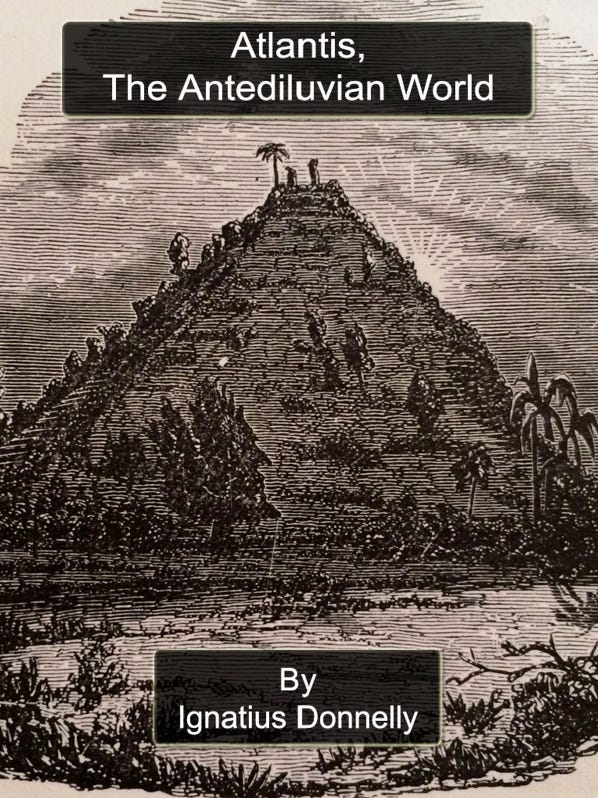
This is peak colonial racism. The crystal skull scam steals indigenous achievements and credits them to fictional white or alien super-civilizations. When practitioners meditate with crystal skulls or attribute healing powers to them, they’re doing so based on old propaganda that indigenous peoples were incapable of their own magnificent achievements.[^12]
The Legend of the Thirteen Crystal Skulls
One pervasive myth claims there are thirteen ancient crystal skulls scattered worldwide, each holding special powers. When all thirteen are brought together, they’ll reveal profound secrets and usher in a new era for all humanity.[^13]
This legend is a relatively modern creation with no basis in Maya mythology. Philip Jenkins suggests that “nearly everything surrounding the mythology of crystal skulls can be traced back to the lies spread by the Mitchell-Hedges and then perpetuated by New Age writers.”[^14]
These claims go beyond widely practiced crystal magic. They hinge on lore spawning from pseudo-archaeological sources that diminish indigenous American achievements.
The Complication: Maya Elders Promoting the Lie
Here’s where it gets complicated and heartbreaking. Legitimate Maya authority figures—elders with genuine lineage and knowledge—have promoted crystal skull mythology. As someone of Maya descent, I strive to respect my elders. But keeping our leaders accountable should not be deemed disrespectful. It should be seen as an attempt to keep our worldview authentic and legitimate.
Don Carlos Barrios, a Maya Aj’qi and key leader in the Maya Council of Elders, wrote in The Book of Destiny that crystal skulls are ancient artifacts originating with a master civilization on Atlantis and Lemuria, created by extraordinary scientists.[^15]
Barrios makes extraordinary claims:
- the Maya come from the Pleiades star system
- crystal skulls are super-computers containing all historical information
- the Mitchell-Hedges skull is magical with Hewlett-Packard keeping secret test files
- 28 genuine skulls have been found
- the world would face calamity if skulls weren’t reunited on December 21, 2012.[^16]
Barrios claimed ancients created 520 crystal skulls, with at least 52 to be reunited at a sacred lake on December 21, 2012. In that setting, a person would walk across water, pass through a spontaneous waterfall, enter a cave and find a “mother skull.” This mother skull would awaken other skulls, reveal mind-boggling knowledge, bring sages and scientists together to re-terraform Earth and activate 52,000 pyramids worldwide, forming an energetic belt giving humanity endless energetic power rendering fossil fuels obsolete.[^17]
None of this is meant to be allegorical. These are hard sci-fi claims. And Atlantis and Lemuria have no linguistic footprints in Maya languages. These are Western words used to entice Western audiences.
Hunbatz Men, another Maya figurehead, led a 2011 ceremony at Serpent Mound in Ohio attempting to “awaken” a stargate using crystal skulls, causing tensions with Native American groups who viewed it as desecration. He fabricated a “Pleiadian Calendar” and was outed on NewAgeFraud.org as a known charlatan.[^18]
Why Would They Do This?
I am sympathetic to Barrios and other Maya authority figures who pandered to New Age crowds during the 2012 Doomsday/Enlightenment craze. Some, like Barrios, invested earnings back into community projects.[^19]
Given the level of poverty and efforts to recuperate from the recently ended genocide, no one is in a position to harshly judge the elders. When Western spiritual seekers arrive with money, desperate to believe in Atlantean Maya and Pleiadian origins, the temptation is understandable.
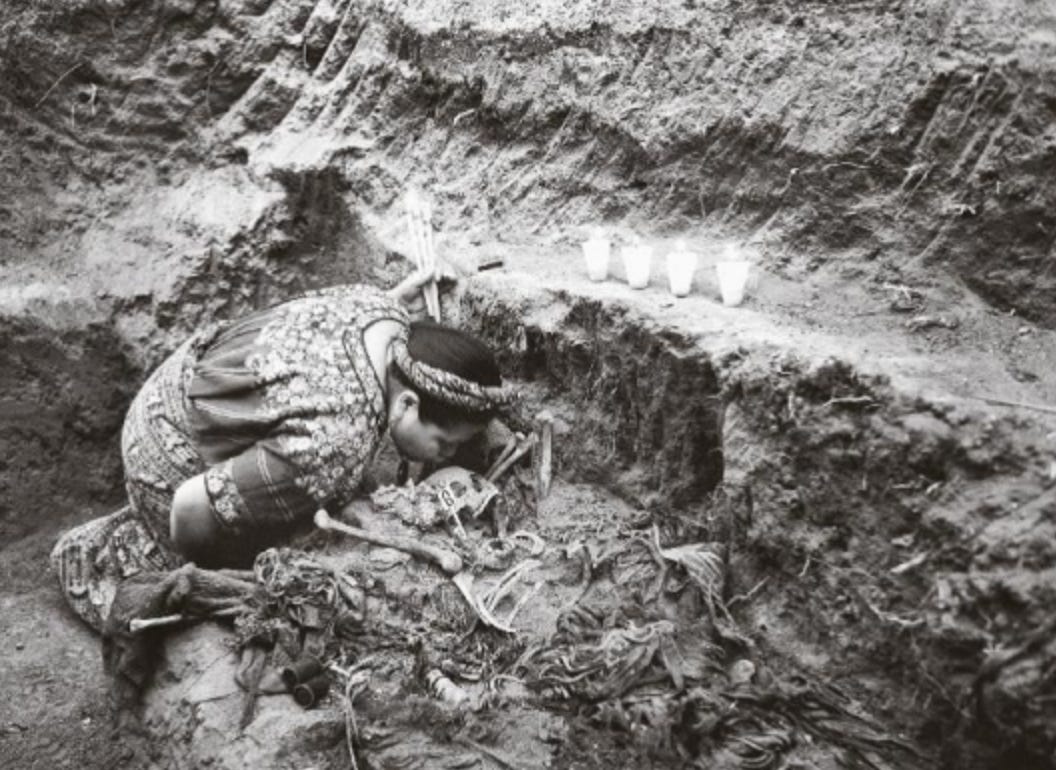
But their efforts added confusion for young Natives searching for their indigeneity. Knowing the depth of knowledge that Maya cosmogenesis can offer seekers, I’m disappointed in the elders’ selection of material during the 2012 era and the subsequent programs promoting similar ideas today.
Maya elders have been catering to Western comfort for decades to make Westerners feel free to spend money on spiritual ventures they host. This is survival. But it’s still perpetuating racist narratives that undermine indigenous achievements.
The Real Harm: What Crystal Skulls Actually Do
The crystal skull phenomenon has increased public interest in Maya civilization, potentially driving support for legitimate research.[^20] But the persistence of myths poses serious challenges:
Undermining Archaeological Authority: Tension between popular beliefs and academic research.[^21]
Cultural Appropriation: Falsely claiming crystal skulls as Maya patrimony perpetuates harmful stereotypes and obscures genuine achievements.[^22]
Pseudo-Archaeological Association: Ancient astronaut theories demean indigenous peoples by implying they were incapable of their own achievements.[^23]
Metaphysical Misdirection: Basing esoteric practices on known falsehoods sets up metaphysical failure and further appropriation.[^24]
If crystal skulls had centuries of legitimate indigenous prophecy, they would have had sway in American landscapes since the 2016-2024 elections, which directly impacted descendants of Mesoamerica. They didn’t. Because they’re not real.
Popular Culture and Museums
The 2008 film Indiana Jones and the Kingdom of the Crystal Skull potentially distorted public perception of Maya civilization, overshadowing genuine archaeological achievements.[^20] Despite scientific consensus, crystal skulls continue to be displayed in museums worldwide, with the British Museum exhibiting its skull albeit with updated 19th-century origin information, thankfully.[^25]
The popularity spawned a thriving market for modern reproductions sold as meditation and healing tools. Crystal magic is a wonderful esoteric practice. But crystal skulls hinge on lore from pseudo-archaeological sources that diminish indigenous achievements. Therefore, practices based on crystal skulls operate on colonial-era narratives that indigenous peoples were too primitive to construct their own civilizations.[^22]
Museums play a crucial role in shaping public understanding. The controversy provides unique opportunities for public education and fostering critical thinking about archaeological methods and cultural heritage. Misconceptions such as Crystal Skulls, Hunab Ku and the liberal use of the term “latino/latina/latinx” when referring to indigenous topics are gateways for deeper educational discussions, not conclusions for discussions. [^23]
The Psychology: Why We Want to Believe
Crystal skulls tap into human fascination with ancient civilizations and exotic cultures. The idea of discovering mysterious artifacts from lost civilizations appeals to our wonder and desire for connection with the past. The power of narrative has played a crucial role in their popularity, demonstrating cognitive dissonance.[^26]
But cognitive dissonance doesn’t excuse racism. And wanting to believe in magic doesn’t justify stealing indigenous achievements and crediting them to fictional Atlantean super-civilizations.
Conclusion: Holding Ourselves Accountable
The crystal skull phenomenon represents an intersection of 19th-century fraud, colonial racism, New Age appropriation and indigenous complicity driven by economic desperation. While scientific evidence conclusively proves these are modern forgeries, the myths persist powered by spiritual commerce, popular culture and the appealing fantasy of lost super-civilizations.
For practitioners of crystal magic: your practice doesn’t require participation in racist fraud. Use crystals. Honor their properties. But don’t attribute powers to objects whose entire mythology is built on the premise that Maya people couldn’t have built Chichen Itza without help from Atlantis.
For Maya elders: I understand the economic pressures and trauma of genocide. But promoting crystal skull mythology participates in erasing our ancestors’ genuine achievements. We can do better.
For museums: stop displaying crystal skulls without clear, prominent information about their fraudulent origins. Every exhibition without proper context perpetuates racist assumptions.
For spiritual seekers: if someone tells you that indigenous accomplishments came from Atlantis, aliens or lost super-civilizations, they’re selling you colonialism in the guise of enlightenment. Maya magical traditions have true value to offer. But like any esoteric art, their manifestations are subtle and synchronistic and not sci-fi claims about a jillion hidden pyramids that will punish our late stage capitalist masters and empower those that read the kybalion.
The crystal skulls are fake.
The science is conclusive.
The racism is blatant.
Our continued participation in this fraud, whether through spiritual practice, museum exhibition or indigenous promotion—makes us complicit in stealing credit from the actual builders of Maya civilization.
The Maya didn’t need Atlantis or Pleiadian intervention. They built their own mathematical systems, astronomical observatories, architectural marvels and spiritual technologies. Attributing their achievements to anyone else is racism, regardless of how many crystals you hold while doing it.
It’s time to let the crystal skull scam die. And it’s time to honor Maya civilization for what it actually accomplished: one of the most sophisticated cultures in human history, built by indigenous peoples who deserve credit for their own genius.
Unlock the Practical Magic Vault
Paid subscribers not only support me delivering you the highest quality occult content out there, but also get access to the Practical Magic Vault—a collection of 4 cornerstone courses on Manifestation, Love, Wealth and Spirit Magic plus exclusive content every week.
Services
Mayan Life Path Astrology Birth Chart Reading: an in-depth soul blueprint analysis that reveals your cosmic destiny through ancient Maya Telluric Astrology, analyzing your daysign, trecena, Venus cycle, Lord of Night, birth year energy and peak manifestation days based on your exact birth moment.
Notes
[^1]: Late 19th-century emergence of life-sized crystal skulls in antiquities market, attributed to ancient Mesoamerican cultures.
[^2]: Mitchell-Hedges skull (”Skull of Doom”) allegedly discovered by Anna Mitchell-Hedges during F.A. Mitchell-Hedges’ expedition at Lubaantun, Belize, in 1924.
[^3]: British Museum skull purchased from Tiffany & Co. (1897); Smithsonian skull anonymously donated; Paris skull from Eugène Boban collection.
[^4]: Claims of Mitchell-Hedges skull being 3,600 years old and used by Maya high priests for esoteric rituals.
[^5]: No crystal skulls found in documented archaeological excavations; F.A. Mitchell-Hedges was adventurer, not archaeologist, with highly scrutinized methods.
[^6]: Maya cultural use of skull symbolism in art, iconography, and ritual contexts including death/Underworld representations, ancestor worship, war trophies, and calendrical symbolism.
[^7]: Archaeological evidence of Maya creating skull-like objects from jadeite, gold, or stone; cranial deformation practice possibly to resemble Maize God.
[^8]: Absence of archaeological evidence for crystal skulls as Maya origin; style and craftsmanship not matching 4,000 years of known Maya artistic traditions.
[^9]: Jane Walsh (Smithsonian Institution) research conclusively showing crystal skulls created in 19th century, likely in Europe.
[^10]: Scanning Electron Microscopy revealing modern lapidary techniques including rotary tools and carborundum abrasives unavailable in pre-Columbian Mesoamerica.
[^11]: Material analysis showing many skulls carved from Brazilian quartz unavailable to ancient Maya artisans.
[^12]: Comparative analysis finding significant discrepancies between crystal skull craftsmanship and genuine pre-Columbian artifacts.
[^13]: Crystal skull mythology rooted in colonial racism assuming indigenous peoples too primitive to create advanced civilizations.
[^14]: Legend of thirteen ancient crystal skulls scattered worldwide, revealing secrets when reunited—modern creation with no pre-Columbian basis.
[^15]: Philip Jenkins quote attributing crystal skull mythology to Mitchell-Hedges lies perpetuated by New Age writers.
[^16]: Mystical properties attributed to crystal skulls in New Age contexts.
[^17]: Don Carlos Barrios, The Book of Destiny: Unlocking the Secrets of the Ancient Mayans and the Prophecy of 2012, claiming crystal skulls originated with Atlantis and Lemuria master civilization.
[^18]: Barrios’ extraordinary claims including Pleiadian Maya origins, super-computer skulls, Hewlett-Packard secret files, El Mirador holographic skulls.
[^19]: Barrios’ detailed prophecy of 520 crystal skulls, 52,000 pyramids activation, Earth terraforming, and mother skull awakening.
[^20]: Hunbatz Men’s 2011 Serpent Mound ceremony, fabricated “Pleiadian Calendar,” and exposure on NewAgeFraud.org.
[^21]: Economic context of Maya elders promoting crystal skulls during 2012 phenomenon, with some investing earnings in community projects.
[^22]: Crystal skull controversy increasing public interest in Maya civilization and Mesoamerican archaeology.
[^23]: Persistence of myths challenging archaeological and historical authority, highlighting issues in public science understanding.
[^24]: Cultural appropriation through false claims of crystal skulls as Maya cultural patrimony.
[^25]: Association with ancient astronaut pseudo-archaeology demeaning indigenous peoples’ capabilities.
[^26]: Metaphysical implications of basing esoteric practices on known falsehoods.
[^27]: Indiana Jones and the Kingdom of the Crystal Skull (2008) potentially distorting public perception of Maya civilization.
[^28]: British Museum continuing to exhibit crystal skull with updated 19th-century origin information.
[^29]: Thriving market for modern crystal skull reproductions and spiritual practices.
[^30]: Museum adaptation of display approaches as new evidence emerged.
[^31]: Educational opportunities for museums through crystal skull controversy.
[^32]: Ethical questions for museums regarding fraudulent artifact acquisition, display, and interpretation.
[^33]: Psychological appeal of crystal skulls tapping into fascination with ancient civilizations and exotic cultures.
[^34]: Persistence of beliefs despite contradictory evidence demonstrating cognitive dissonance.
Why did you choose to disable Pangram AI scanning on your article?