


The Calendar Ends. and Then…Silence
The Haab’, the ancient Mayan solar calendar, runs on a logic that is ruthless in its precision. Eighteen months of twenty days each. Three hundred and sixty days of named, counted, cosmically accountable time — days governed by patron deities, directional forces and the accumulated weight of ancestral observation stretching back millennia. It is a system of extraordinary sophistication, a celestial clockwork built not merely to track seasons but to map the moral and spiritual architecture of existence itself.
And then it stops.

At the end of those 360 named days, five days remain before the new year begins. The Maya call them the Wayeb’ (rendered variously in colonial-era sources as Uayeb or Wayeyab) and they treat them with a dread that modern readers, dulled by algorithmic calendars and digital time-tracking, are barely equipped to comprehend. These were not simply unlucky days in the way that Western superstition fears a Friday the 13th. The Wayeb are something far more structurally disturbing: they were days that, by the internal logic of the cosmos, should not exist. They were the remainder. The overflow. The five days the universe had not finished creating — or had deliberately left unfinished, a wound in time through which formless and hostile intelligences might seep into the world of the living.
The Wayeb begins this Wednesday. Five days of nameless, patron-less, cosmically unprotected time. And whether you approach this from the position of a serious practitioner, a student of Mesoamerican cosmology or simply someone who has felt that certain passages of the year carry an undeniable heaviness — you need to understand what you are entering.

The Nameless Days: An Anatomy of the Void
In the Haab’ calendar’s eighteen-month structure, each month (winal) carries a name and a presiding spirit. Time, in this framework, is never neutral. Every day arrives sponsored, so to speak — accompanied by cosmic forces that give it character, potency and spiritual direction. The Maya did not experience time as an empty container into which events were poured. Time itself was alive, agentive and morally weighted.
The Wayeb disrupts this entirely.
These five days carry no face. They belong to no month. They are not assigned to any of the four cardinal directions that structure Maya cosmological thinking. In the Books of Chilam Balam — the colonial-era compilations of Maya prophetic and ceremonial texts — the Wayeb is described with language that conveys not merely misfortune but ontological wrongness. This is not a season of bad luck. It is a season in which the organizing principles of cosmic order temporarily withdraw, leaving something else — something older, less structured and profoundly indifferent to human flourishing — to fill the space.

Imagine, if you can, a crack in the fabric of numbered, named, deity-anchored time. A fissure through which the outer dark presses inward. A temporary collapse of the membranes that ordinarily separate the ordered world of human habitation from the vast and churning non-space that surrounds it. The ancient Maya did not require H.P. Lovecraft to articulate this horror — they had been living with its reality for centuries before the concept of a “mythos” was ever theorized in New England. What lurked beyond the edges of sanctioned time was not merely dangerous. It was fundamentally alien to the categories that make human experience coherent.
This is the Wayeb.

What the Ancient Sources Actually Say
Colonial-era sources, including Bishop Diego de Landa’s Relación de las Cosas de Yucatán (1566), document the specific ritual responses of Yucatec Maya communities to the Wayeb with the detail of a man who found these practices simultaneously horrifying and fascinating. During these five days, ordinary Maya people did not leave their homes if they could avoid it. They did not bathe, comb their hair or perform heavy labor. Sacred images were covered. Fire was extinguished. No new civic or ceremonial projects were initiated.
This was not superstition in the pejorative sense. It was a rational response to a documented cosmological condition. The patron deities who normally anchored daily life had, in effect, vacated the premises. The directional Bacabs — the four cosmic figures who hold up the corners of the world — had not yet been assigned their roles for the incoming year. The cosmic administration, to put it in anachronistically bureaucratic terms, was between governments. And in that interregnum, the unsanctioned powers that ordinarily press against the edges of structured time found the doors less firmly locked.
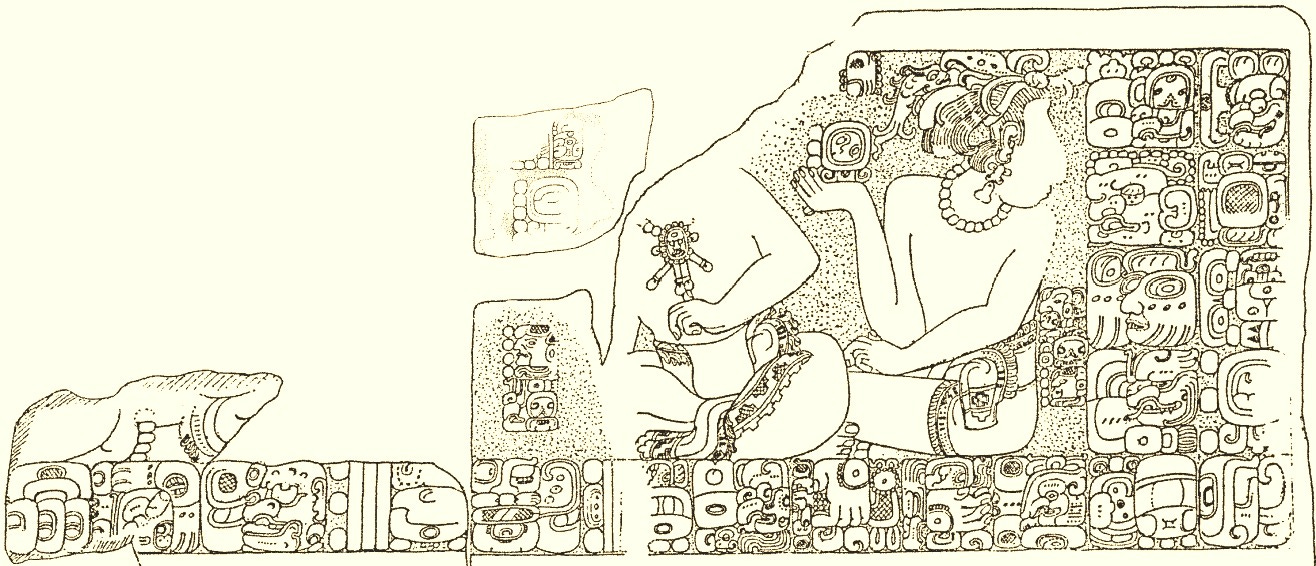
Among the K’iche’ Maya, the concept of way (the root from which Wayeb derives) refers to a specific class of spiritual companion or co-essence (often an animal spirit) capable of operating in non-ordinary states of consciousness and reality. The wayob’ (plural) could be benevolent or predatory. Shamanic practitioners cultivated relationships with wayob’ as sources of power and vision. But loose, unattached wayob’ — those without proper relational anchoring to a living practitioner — belonged to the category of genuinely dangerous spiritual entities. The Wayeb period, etymologically connected to this same root, represents the five days in which something analogous to these unmoored spirit-entities holds sway over the calendar itself.
Formless. Hungry. Not evil in any moralized sense, but utterly unconcerned with the structures that protect human life and sanity.

The Wayeb in Modern Occultism and Spiritual Practice
Here is where the rubber meets the road for contemporary practitioners and where we must resist both the temptation to domesticate the Wayeb into harmless “rest and reflection” season and the opposite temptation to perform theatrical dread for aesthetic effect. The Wayeb matters in modern occultism for precise structural reasons that align with some of the deepest currents in Western, Eastern and multi-cultural esoterica.
The Liminal as Occult Technology
Every serious magical tradition recognizes liminal time as qualitatively different from ordinary time. The thresholds; midnight, dawn, solstice, equinox, the moment between waking and sleep — are understood as points where the boundaries between layers of reality thin, allowing communication, working and transformation that are unavailable in the thick middle of ordinary temporal experience. The Wayeb is not a single liminal moment. It is five consecutive days of calendrically enforced liminality. This is not a crack in the door. It is the door flung open as if by the hand of a phantasm.
For practitioners working with shadow material, ancestral contact or deep psychic excavation, the Wayeb offers a window of access that has no real parallel in the Western calendar. The entities and intelligences that operate in unstructured time — whether you frame these as psychological complexes or genuinely autonomous non-human agents — are closer during these five days.
Chaos Magick and the Formless
The Wayeb maps with surprising precision onto the theoretical terrain that chaos magick has been exploring since Austin Osman Spare and later Peter Carroll articulated the productive potential of pre-rational, pre-structured magical states. The Kia of Spare’s system — that primordial, contentless awareness prior to the imposition of belief and desire — is functionally a neutral version of what the Wayeb period represents in temporal terms: a state of cosmic null, uncomfortable and ungoverned.
The Wayeb is not a time to launch initiatives. It is a time to descend into the substrate from which initiatives emerge. The magician who understands this works with the grain of the cosmos during these five days, not against it.
Jungian Shadow and the Nameless Days
From a depth-psychological perspective, the Wayeb aligns almost perfectly with what Jung identified as the operations of the shadow during periods of ego dissolution. But in this case, the ego is time itself. When the organizing structures of consciousness temporarily step back — whether through liminal ritual, dreamwork, plant medicine or contemplative practice — the shadow material that ordinarily stays regulated below the threshold of awareness rises. During the Wayeb, the calendar itself performs this dissolution. The cosmic “ego” of named, ordered time withdraws and what rises is ancient, strange and demanding acknowledgment.
This is why the traditional Maya response was not to combat the Wayeb but to accommodate it — to lower one’s profile, reduce one’s claims on the world and wait with appropriate humility for the return of ordered time. This is shadow work at the cosmological scale. Note, that the idea here is not integration of the Wayeb like the shadow. That would be dangerous. What are known as the Lords of Night found within a Mayan birth chart would be a better example of shadows to be directly integrated, while the Wayeb should be treated more along the lines of “blood on the doorposts.”

How to Observe the Wayeb as a Practitioner
None of what follows is recreational spirituality. If you approach the Wayeb as a five-day “self-care” retreat with candles and a bubble bath, you are missing the point so entirely that you would have been better off ignoring it. The Wayeb demands honesty, discipline and a willingness to sit with what is genuinely uncomfortable. And by no means is this a comprehensive program, but just useful tips in order to do something rather than nothing.
Reduce outward action. Increase inward attention. The traditional prohibition against beginning new projects during the Wayeb is not merely superstition — it reflects an understanding that intentions set during unanchored time carry the chaotic signature of the period in which they were formed. Hold your launches, your announcements, your new commitments. Turn instead toward interior assessment.
Consider Fasting from “Vices.” The Wayeb is not a time for indulgence. The ancient Maya understood that the unanchored days demanded a corresponding reduction in the appetites — not as punishment, but as spiritual strategy. When the cosmic structure withdraws, your own internal structure must compensate. This means examining whatever you use to avoid stillness: alcohol, excessive consumption, social media’s dopamine loop, the endless noise of entertainment. A fast from these during the Wayeb is not moralistic self-denial. It is a deliberate clearing of the psychic static that keeps you from perceiving what the nameless days are actually transmitting. What you habitually reach for when you are uncomfortable is precisely what must be set down now. The discomfort is the signal. The Wayeb demands that you feel it without a buffer.
Spend Time in Silence in a Dark Room. This is perhaps the most ancient and most demanding of Wayeb observances, and the one most likely to be dismissed by practitioners who have confused spiritual sophistication with spiritual busyness. Sit in darkness. Sit in silence. Not with a guided meditation playing, not with binaural beats, not with a carefully curated ritual soundtrack. True darkness. True silence. The kind that makes the untrained mind immediately begin generating noise to fill the void, because the void is exactly what it fears. The Wayeb is the season when the cosmos models this practice for you at the calendrical scale — it empties the schedule of the sky. You are being invited to mirror that emptiness within yourself. What surfaces in genuine silence and genuine darkness during these five days is not random. It is what has been waiting behind the noise for the rest of the year. Listen to it.

The Return of Ordered Time
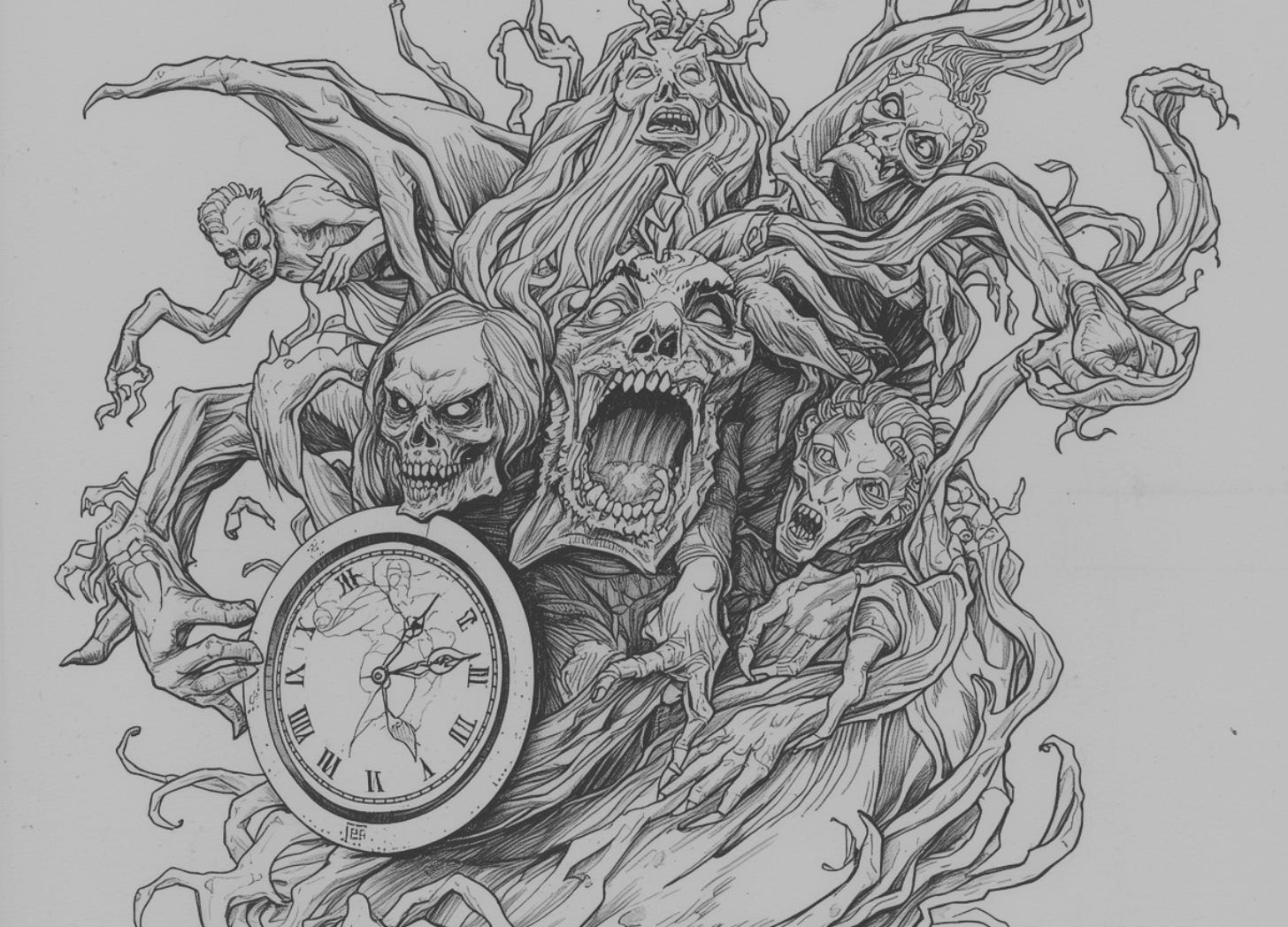
On the sixth day, the new Maya year begins. The Bacabs take their stations. The patron deities reassign their governance. The great wheel of named, anchored, cosmically administered time resumes its rotation and the crack in the sky seals itself.
But the practitioner who has moved through the Wayeb with genuine attention emerges carrying something. A deposit from the formless. A fragment of the unutterable strange that lives outside the boundaries of organized time.
The Maya were not primitive people who feared what they did not understand. They were sophisticated cosmological engineers who understood the Wayeb precisely — and feared it accordingly. They built their calendar around this five-day abyss not to simply account for the leap of the solar year, but because they were honest about what the universe actually contains.
There are five days beginning this Wednesday when the structure of time itself is compromised, when the guardians of the calendar step back and when something vast and ancient and genuinely indifferent presses its incomprehensible face against the thinning membrane of the world.
Pay attention. Take precautions. Do the work.
The void does not care whether you believe in it or not.

Services
Mayan Astrology Birth Chart Reading: an in-depth soul blueprint analysis that reveals your cosmic destiny through ancient Maya Telluric Astrology, analyzing your daysign, trecena, Venus cycle, Lord of Night, birth year energy and peak manifestation days based on your exact birth moment.


