


I grew up between worlds. My Kaqchikel Maya grandmother taught me to read smoke and recognize when the ancestors were near. My Afro-Latino neighbors showed me how to work with santos and spirits whose names shifted depending on who was listening. I learned early that survival sometimes means hiding your gods behind someone else’s face, that the colonizer’s language could become a container for indigenous power and that the deepest truths were often spoken in whispers between trusted family members.
But I also learned something troubling: many of the spiritual communities I encountered as an adult had no such complexity. They had founders who claimed unbroken lineages stretching back millennia. They had “ancient” practices that somehow appeared fully formed in the 1970s. They had indigenous wisdom stripped of its context, repackaged and sold without attribution. And they had students—earnest, hungry seekers—who had no tools to discern authentic transmission from spiritual colonialism wearing a feathered headdress.
This is the crisis at the heart of contemporary spiritual practice: we have built communities around individuals rather than traditions, around charisma rather than accountability, around invented histories rather than honest scholarship. We have replicated the very colonial patterns we claim to resist—the extraction of indigenous knowledge, the erasure of its origins, the centering of non-indigenous authorities who profit from what was stolen.
But there is another way. A way that honors indigenous roots while acknowledging colonial disruption. A way that builds communities capable of outliving their founders. A way that treats decolonization not as a buzzword but as a discipline—one that requires scholarship, discernment and the willingness to deconstruct even the traditions we love.
This is not about policing who can practice what. This is about building something that lasts. Something that honors the ancestors who kept these traditions alive through genocide, enslavement and forced conversion. Something that gives indigenous practitioners the authority they deserve without demanding they constantly justify their existence. Something that tells the truth about where our practices come from and what they have survived.
What Decolonization Is NOT
Let’s be clear about what we are talking about, because “decolonization” has become one of those words that gets thrown around until it means everything and nothing.
Decolonization is not a hashtag. It is not a way to signal your political alignment or make yourself look progressive in spiritual spaces. It is not about collecting marginalized identities like Pokemon cards or performing allyship for social credit. I have watched too many practitioners deploy the language of decolonization while their actions replicate the exact extractive, exploitative patterns they claim to oppose.
It is not about shaming people for their ancestry or making spiritual practice into a DNA test. Your bloodline does NOT automatically grant you spiritual authority or exclude you from engaging with traditions. Ancestry matters, yes—but it is not the only thing that matters. I have met indigenous practitioners who have lost connection to their traditions through forced assimilation and non-indigenous practitioners who have dedicated decades to respectful, accountable engagement with indigenous wisdom. The work of decolonization acknowledges both realities.
It is not about destroying everything that came through colonial contact or pretending that syncretism is inherently corrupted. Syncretism—the blending of different religious traditions—was often a survival strategy. When enslaved Africans hid their orishas behind Catholic saints, when Maya practitioners maintained their calendar systems while outwardly conforming to Christianity, when European cunning folk incorporated grimoire magic with indigenous herbalism—these were not corruptions. These were acts of resistance and creativity under conditions of violence.
It is not about creating new hierarchies where being indigenous automatically makes you right about everything. Indigenous people are human. We have disagreements, competing interpretations, and yes, sometimes we are wrong about things. Decolonization does not mean replacing one form of uncritical guru worship with another. It means building accountable structures where indigenous voices are centered without being idealized beyond recognition.
And it’s absolutely not about white-guilt-driven paralysis where non-indigenous practitioners become so afraid of appropriation that they abandon all engagement with indigenous wisdom traditions. That kind of performative withdrawal does not serve anyone—it just leaves indigenous knowledge in the hands of the most exploitative appropriators while well-meaning people stand aside wringing their hands.
I have seen this happen repeatedly: a non-indigenous practitioner develops genuine interest in, say, Mayan astrology or Yoruba divination. They start learning, then encounter discourse about appropriation. Rather than doing the harder work of engaging respectfully and accountably, they just... stop. Meanwhile, the plastic shamans and spiritual con artists continue extracting, repackaging and profiting from indigenous traditions without any concern for ethics or accuracy.
Decolonization does not mean non-indigenous people cannot engage with indigenous traditions. It means they need to engage differently—with humility, proper attribution, financial reciprocity to indigenous communities, deference to indigenous authorities and constant attention to power dynamics.
What Decolonization IS
So if decolonization isn’t any of those things, what is it actually?
Decolonization in esoteric practice means recognizing how colonialism has shaped spiritual transmission itself—the methods, the authorities, the very categories we use to understand what “authentic” practice means.
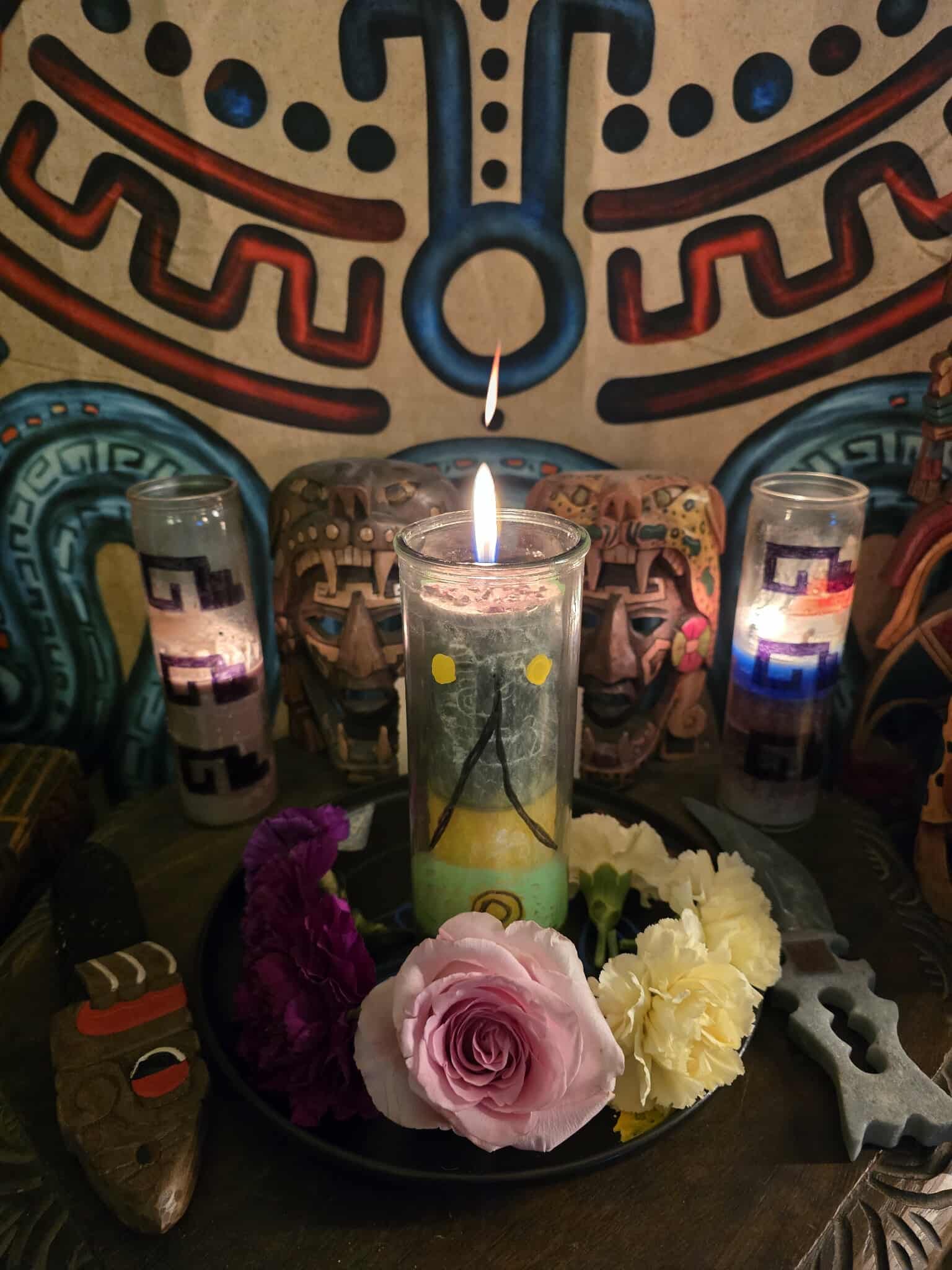
* personal ritual with the Hero Twins, Hunahpu & Ixbalamque
It means acknowledging that when Spanish conquistadors and Catholic missionaries systematically destroyed Mayan codices, when the Inquisition tortured practitioners of indigenous European traditions, when enslaved Africans were forbidden to speak their ancestral languages—these were not just historical events that happened centuries ago and now are over. They created wounds in spiritual transmission that we are still navigating. They forced traditions underground, broke lineages and created conditions where survival required hiding, syncretizing, or inventing new forms altogether.
The burning of the Mayan codices was epistemicide, the deliberate murder of an entire way of knowing. When Diego de Landa burned hundreds of codices in 1562, he destroyed astronomical knowledge, historical records, medicinal information, cosmological frameworks, and divination systems that had been refined over millennia. Only four codices survived. Four. Out of hundreds or thousands.
That loss reverberates through every attempt I make to reconstruct Mayan spiritual practice today. I am working with fragments. I am piecing together scraps that survived because someone hid them, because they were in a private collection that escaped destruction, because indigenous practitioners memorized what they could and passed it down through whispers. This is what colonization did to spiritual transmission—it created gaps, silences and forgetting that we are still working to repair.
When we talk about decolonizing spiritual practice, we are talking about grappling with these realities honestly rather than pretending they do not affect how we practice today.
Three Pillars of Decolonization Work
Decolonization in spiritual practice can be said to rest on three interconnected pillars. All three are necessary. You cannot do one without the others and claim you are doing decolonization work. Well, you can say you do, but you might inadvertently be “re-colonizing.”
Pillar One: Restoration
Restoration means recovering what was hidden, stolen or deliberately obscured.
This is the more scholastic work. This is primary source research. Archaeological evidence. Linguistic analysis. The hard, often tedious work of piecing together what was practiced before colonization disrupted transmission. The common retort to this is “we can’t trust the whiteman archaeologists.” And while there have been examples of western academics that applied their JCI (Judeo-Christian-Islamic) worldviews and agendas to the interpretations of indigenous discoveries, this is largely a condition from the past and many modern scholars approach native cultures with due respect. Simply writing off academia is an excuse to avoid the hard work.

For my own Mayan practice, this means spending time with the Dresden Codex—an actual pre-Columbian manuscript containing astronomical tables, divination almanacs and ritual instructions. It means studying the Madrid and Paris Codices, reading colonial-period texts like the Popol Vuh and the Books of Chilam Balam (while accounting for colonial filter and Christian overlay), examining archaeological evidence from murals and ceramics and stone inscriptions.
It means learning to read glyphs. It means cross-referencing ethnographic research with contemporary Kaqchikel and K’iche’ and Yucatec Maya Daykeepers. It means attending to what survived and being honest about what is lost. So yes this means reading what many people would consider boring academic journals.
For practitioners of African diaspora traditions, restoration might mean tracing how Yoruba cosmology survived the Middle Passage, how it transformed into Lucumí and Santería and Candomblé, what got preserved and what got adapted and what got lost entirely. It means studying the languages, the original cosmologies, the ways enslaved people encoded knowledge in songs and stories and ritual objects that slaveholders could not recognize as religious.
For those working with European indigenous traditions, it means going back to the folklore collections, the grimoires, the trial records (where practitioners were forced to describe their work under torture), the herbals and agricultural practices that preserved older knowledge.
Restoration requires intellectual humility. We have to acknowledge gaps in the record. We have to resist the temptation to fill those gaps with modern invention presented as ancient knowledge. We have to be honest about what we know, what we can reasonably infer, and what we’re creatively reconstructing.
Pillar Two: Accountability
Accountability means naming honestly where our practices come from.
This is the ethical work. This is the uncomfortable work of examining who profits, who gets centered, who gets erased.

If something is a 20th-century reconstruction, we say so. We do not claim it is an “ancient unbroken lineage” when Gerald Gardner invented it in the 1940s or when Maya elders never spoke a word of ceremonial cacao before 2011. There is nothing wrong with modern reconstruction or contemporary innovation—but lying about origins is harmful.
If a practice is a syncretic survival strategy, we acknowledge that context. We explain why enslaved Africans hid Elegua behind Saint Anthony, why Maya practitioners maintained the 260-day calendar while outwardly conforming to the Catholic calendar. We honor the strategy without pretending the syncretism did not happen or that it was a happy multicultural blending rather than survival under threat of death.
If a practice was appropriated from a marginalized tradition, we confront that extraction and work to repair it. This means asking hard questions: Who originally developed this knowledge? How did it come into non-indigenous hands? Who is profiting from teaching it? Are indigenous practitioners being compensated, credited and given primary authority? Or are non-indigenous teachers making careers from repackaged indigenous wisdom while indigenous practitioners remain marginalized?
Accountability means white teachers of “Celtic shamanism” admitting that ancient Celts did not use the term “shamanism” and that their practice is modern reconstruction drawing from multiple sources, not traditional Celtic practice. It means non-indigenous teachers of Native American ceremonies either stopping entirely (if they’re working with closed practices) or being extremely transparent about their training, their relationships with indigenous teachers and how they are giving back to indigenous communities.
It means looking at your bookshelf, your teaching income, your platform and asking: whose knowledge am I benefiting from? Am I giving proper credit? Am I sharing resources and authority? Or am I extracting value while leaving the source communities behind?
This pillar makes people the most uncomfortable because it requires examining our own complicity in colonial patterns. It is much easier to blame the conquistadors who destroyed the codices than to ask whether we are perpetuating epistemicide by teaching indigenous practices without proper attribution or compensation.
Pillar Three: Reconstruction
Reconstruction means building practices that honor indigenous roots while acknowledging we cannot simply return to a pre-colonial past.
This is the creative work. This is where we take what we have restored through scholarship and what we have learned through accountability work and we build something that works for contemporary practitioners.
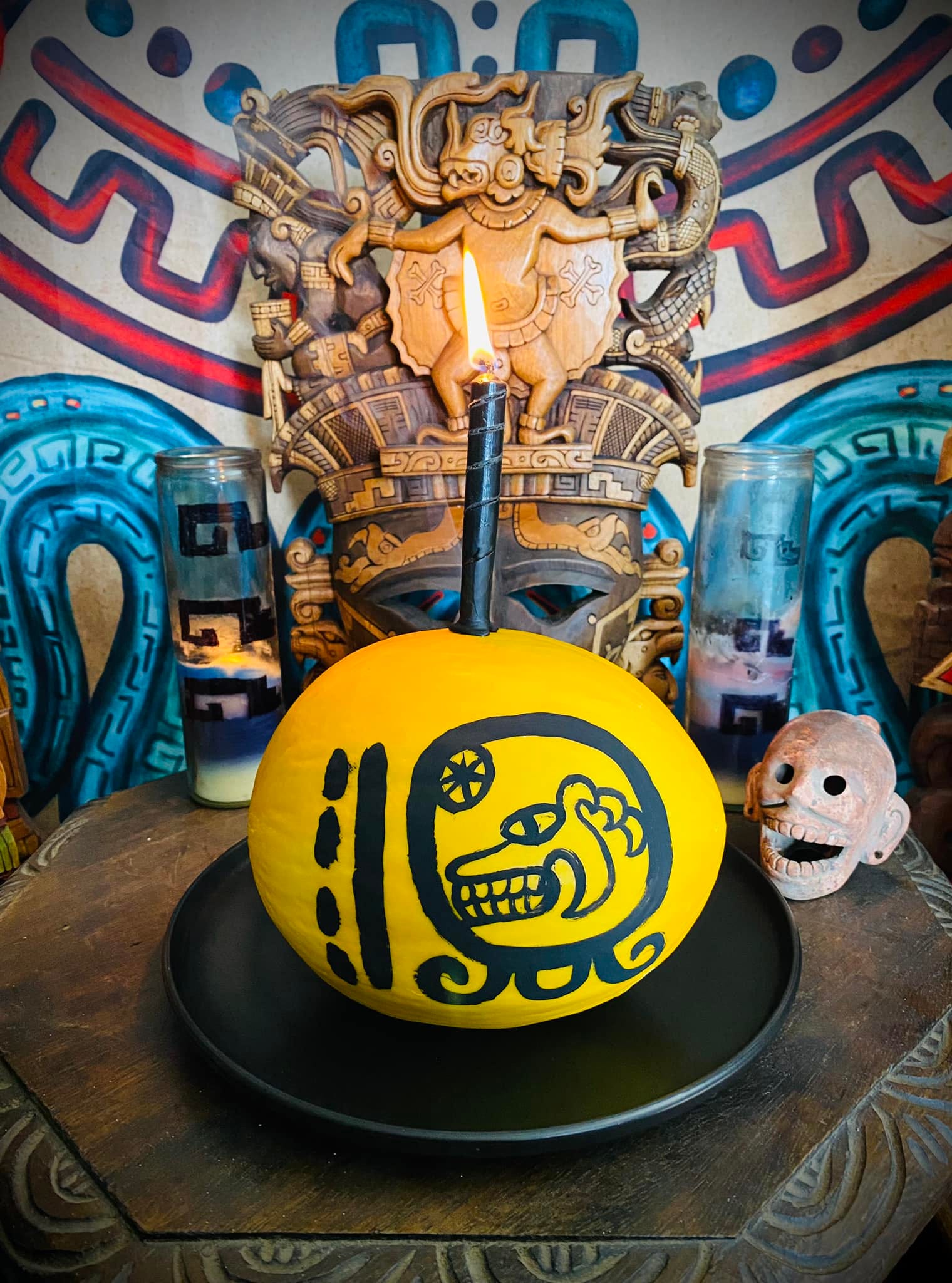
*personal ritual done during the total solar eclipse of spring 2024.
The world has changed. We have changed. I cannot practice exactly as my highland pre-columbian Maya ancestors did 500 years ago. I live in a diaspora context, I do not speak Kaqchikel fluently, I have access to technologies and influences they did not have and I am navigating multicultural ecosystems they never encountered.
But I can create practices that tell the truth about their origins, that center indigenous voices and methodologies, and that build toward sustainability rather than guru-dependency.
Reconstruction means I can develop divination practices solidly based on what the codices show while acknowledging I am not performing an “ancient” ritual unchanged for millennia. I am creating contemporary practice informed by historical sources. This is honest, sustainable and respectful. Keep in mind, other traditions on the colonizer side of the fence do this all the time and there is a lot less pushback over their esoteric additions.
It means I can create rituals that honor Mayan Yuumtsiles (deities) using materials available to me rather than insisting on total historical accuracy that might be inappropriate for my context. The goal is connection with ancestral wisdom and maintenance of core cosmological principles, not historical reenactment.
It means we can innovate—create new practices informed by old wisdom—as long as we are transparent about what is archaic and what is contemporary creation.
Reconstruction liberates us from both the lie of unbroken lineage and the paralysis of perfect authenticity. We are not claiming to be doing exactly what the ancestors did. We are claiming to be doing our best to honor what they preserved, to repair what colonization broke and to build something sustainable for future generations.
How This Differs from Cultural Appropriation Debates
I want to distinguish decolonization work from the cultural appropriation debates that dominate a lot of progressive spiritual spaces, because while they are related, they are asking different questions.
The cultural appropriation conversation often gets stuck in a binary: Can this person from this background practice that thing from that culture, yes or no?
This framework has some use: it can prevent the most egregious forms of extraction and mockery. But it is limited because it focuses on individual practice rather than systemic or industry levels of display.
Decolonization work should be more interested in the systems that shape those questions.
Why do non-indigenous practitioners often have more platform, more profit and more authority to teach indigenous practices than indigenous practitioners themselves?
What structures make it so that the safest way for indigenous traditions to survive is often by disguising themselves in colonial language?
How do we build communities where indigenous practitioners can lead without constantly having to prove their legitimacy or educate people about basic respect?
Who gets believed when there is disagreement about how to interpret a tradition?
Who gets paid when indigenous wisdom gets taught?
Who gets book deals, conference invitations, podcast interviews?
And who remains marginalized, disbelieved or extracted from even within traditions that come from their ancestors?
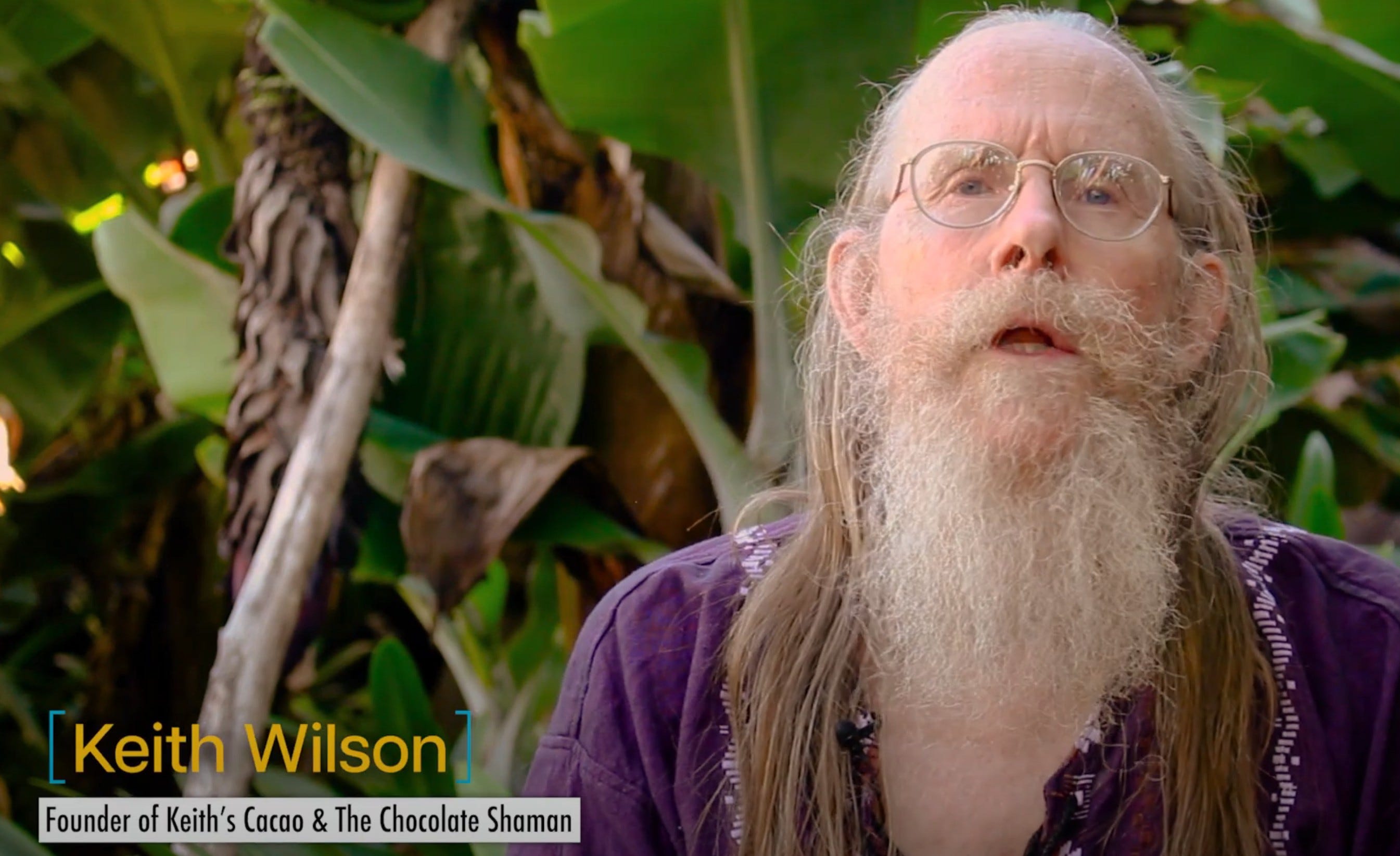
*Canadian New Age figure Keith Wilson, the primary proprietor of the “Ceremonial Cacao” craze.
The appropriation debate asks: who can do this practice?
The decolonization question should ask: who has authority to teach it, who profits from it, who gets believed and what systems keep indigenous people marginalized even within traditions that come from their ancestors?
This is a more complex and more uncomfortable inquiry because it cannot be resolved with simple rules about who is allowed to practice what. It requires examining power structures, economic systems, whose knowledge gets taken seriously and how spiritual authority gets constructed and maintained.
Let me give you a concrete example. A white person practicing tarot isn’t really a cultural appropriation issue. Tarot comes from European traditions, and while it has been adopted globally, there is no definite indigenous community being harmed by widespread tarot practice.
But if that same white person starts teaching “Ancient Celtic Tarot” based on invented history, claiming unbroken lineage to pre-Christian Druids and making their career from repackaging Celtic mythology without citing actual Irish or Scottish scholars or giving back to Celtic cultural preservation efforts, now we are in decolonization territory. The issue is not that they are practicing tarot. The issue is false claims to authority, invented history presented as fact and extraction from cultural traditions for profit without reciprocity.
Similarly, a non-indigenous person learning about Mayan astrology is not automatically appropriating. But if they take that knowledge, rebrand it as their own system, fail to credit Maya sources, position themselves as a primary authority while actual Maya practitioners remain invisible and profit from teaching without giving back to Maya communities— yeah bud, that’s a decolonization issue.
The appropriation framework asks “can you practice this?” The decolonization framework should ask “how are you practicing this, who are you learning from, who benefits from your practice and teaching and what are you doing to repair colonial harm?”
Why This Matters: The Stakes of Getting It Wrong
You might be wondering: why does all this matter? Why can’t people just practice what works for them and stop worrying about historical accuracy or political correctness?
Because people and history get hurt when communities are not grounded in truth and accountability.
I have seen seekers spend years devoted to traditions that turned out to be complete fabrications, feeling betrayed and spiritually unmoored when the truth emerged. I have seen indigenous practitioners have their traditions appropriated, repackaged and sold by non-indigenous gurus or other indigenous people loyal to the dollar who profit while the original communities struggle. I have witnessed abuse covered up because the guru claimed spiritual authority that made them unquestionable.
When communities are built on lies, they are brittle. One honest investigation, one whistleblower, one scandal and the whole thing collapses. Students lose not just the false mythology but often abandon the valuable practices that got tangled up with the lies.
When communities center non-indigenous authorities for indigenous traditions, indigenous practitioners get marginalized. They are forced into the role of cultural ambassadors, expected to explain and defend their traditions to skeptical audiences. Their knowledge gets extracted, repackaged and sold back to communities while they remain poor and unrecognized.
When communities do not do decolonization work, they replicate colonial violence. They extract indigenous knowledge without compensation. They erase origins. They center white or non-indigenous teachers who get rich from repackaged indigenous wisdom. They create spaces where indigenous practitioners cannot access their own traditions without navigating non-indigenous gatekeepers (speaking from personal experience here).
And perhaps most insidiously, when communities avoid decolonization work, they preserve the colonizer’s greatest victory—making indigenous people believe their own traditions are inferior, dangerous or shameful. Quite the contrary, indigenous traditions have much to offer the 21st Century.
My Maya grandmother whispered her knowledge because she had been taught that indigenous practice was superstition, that it was backwards, that it was devil worship. The colonizer’s voice lived in her head, making her afraid of her own ancestral wisdom even decades after legal prohibitions ended. That is what colonization does—it does not just destroy knowledge, it destroys people’s confidence in their right to that knowledge.
When we do decolonization work, we are not just correcting historical errors or being politically correct. We are repairing ongoing harm. We are creating spaces where indigenous practitioners can access their own traditions with dignity and authority. We are building sustainable communities that honor rather than exploit the ancestors who kept these traditions alive through violence and suppression.
Moving Forward: An Invitation Rather Than a Demand
Decolonization work is not comfortable. It requires examining your own practice, your teachers, your sources and your relationship to power. It requires admitting when you have been wrong, when you have benefited from extraction, when you have unconsciously replicated colonial patterns.
But it’s also liberating.
When you stop defending invented histories and start being honest about sources, your practice becomes unassailable. You are not waiting for someone to debunk your claims because you are already telling the truth.
When you start doing the scholarly work of restoration, your practice deepens. You are connecting with older, richer sources than any contemporary guru’s interpretation. The history does not drain the mystery—it enhances it.
When you build accountability into your communities, they become sustainable. Power is distributed rather than concentrated. Abuse is harder to hide. The work itself—not the personality of the teacher—becomes the foundation.
And when you engage in reconstruction, you are participating in something ancient and ongoing: the human project of maintaining wisdom traditions across generations, adapting to new circumstances while honoring ancestral roots.
This is not a call for perfection. This is not a demand that you must decolonize immediately and completely or you are a bad person. This is an invitation to join the work—the difficult, necessary, sacred work of repairing what colonization broke and building something sustainable for the generations coming after us.
The ancestors who kept these traditions alive through genocide, slavery and forced conversion did not do that work so we could be sloppy with what they preserved. They whispered knowledge in secret, risk torture and death to maintain practices encoded wisdom in ways the colonizers could not recognize. They did not do all that so we could appropriate without attribution, invent convenient histories or extract without reciprocity.
They did it so the traditions could continue serving humanity’s spiritual needs. So we could heal the wounds colonization created. So future generations could reclaim what was stolen.
We honor them by taking decolonization seriously—not as a buzzword, but as a discipline. Not as a hashtag, but as a commitment to restoration, accountability and reconstruction.
The work is hard. The rewards are lasting. And the ancestors are watching to see what we build with what they preserved.


